Make the impossible possible.
Our goal is to make quantum programs useful for research and your own ideas on an ordinary PC. We explore new ways to simulate larger circuits with less memory and compute time, and check our results against independent references.
No account needed. Our i9 simulates the quantum programs.
Our idea and current progress
We are developing our simulator on an Intel Core i9 with an RTX 3090. We test unconventional computational approaches against established comparison software. Here you can try quantum programs and follow our measured progress.
In our research test, we simulated the full state of a 35-qubit circuit on our PC. Measurements and checks
From simulation to our own quantum hardwareWe are researching our own approach to quantum hardware. Our goal is an affordable build with simpler technology. We use the simulator as a test lab to evaluate models and control ideas before building hardware. The technical details remain confidential.
Set your code on the lock and start the search. Use the menu to explore the basics and our research.
Start with the basics →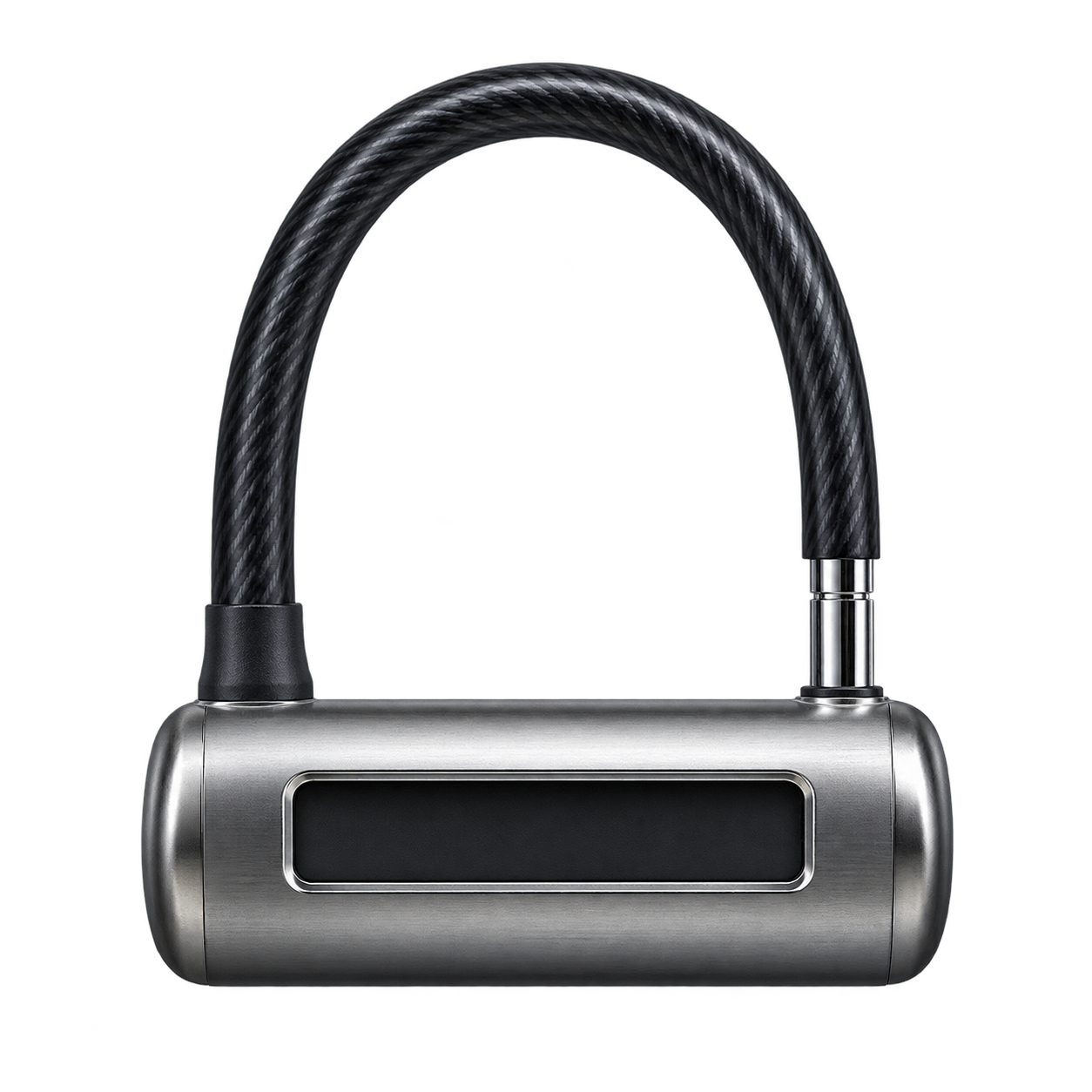
Your learning path
One step at a time.
Try an experiment. Continue when you are ready for the next idea.
Your bicycle lock. Can the i9 find the code?
Six wheels. 1,000,000 possible codes. Set a test code, scramble the wheels and let our i9 search for it.
Your test code: 314159
How to use the lock
Drag the numbers up or down with your mouse or finger, or use the arrow buttons. On a keyboard, use ↑, ↓ or the number keys.
Set your chosen code on the open lock. Closing it saves this test code as the matching rule.
The compute worker is currently unavailable. You can still set up the lock.
What does our simulator calculate?
Real quantum simulation. Your code. Our computer. Our i9 runs a simulation of Grover's quantum program with 20 search qubits on all ten cores. Once the result is confirmed, the wheels settle on the matching code and your virtual lock opens.
Qubits, computation and our next goal
Why can the search find my code?
The lock is virtual; the calculation is real. Our ordinary computer runs a mathematical simulation of the quantum program. Please use a made-up test code: it is sent to our server for the calculation.
You supplied the test code. It defines the matching rule for our quantum program. Grover's algorithm then increases the probability of measuring the matching result. An unknown real PIN would first require a suitable checking rule; this learning lock is not a way to open real locks.
The lock has 1,000,000 valid codes, from 000000 to 999999. Twenty search qubits represent 1,048,576 bit strings; the remaining 48,576 are not valid codes. Our specialised C++ simulator computes all 1,048,576 possibilities using 804 Grover rounds, with no extra helper qubit. The most frequent measured valid code must satisfy the matching rule, or the lock stays closed.
The ideal success probability per measurement is about 99.99998%, not a guaranteed 100%. The full double-precision state vector occupies 16 MiB; the complete program requires additional memory. The calculation uses all ten cores of the i9 with AVX2 instructions. The result is bit for bit the same as with a single core.
More digits mainly mean more computing work: in each of the 804 rounds, the simulation recomputes all 1,048,576 possibilities. That takes about a tenth of a second. An ordinary program that checks the codes one after another against the same rule would finish sooner here. The simulation shows how the quantum program works. It is not a speed record and not a quantum advantage.
The wheels do not show quantum codes being tested one by one. Their fast movement fills the wait for results; slow motion then highlights the match. Both are visual design, not a measure of compute speed. With reduced motion, the result appears directly.
From a light switch to a qubit
A qubit measurement gives you 0 or 1. The coin toss shows why equal probabilities can produce different counts.
The explanation in detail
A classical bit has the value 0 or 1. A qubit can be in a superposition of both possibilities. The coin is a starting point: a measurement gives one outcome, with a probability we can calculate. Amplitudes distinguish this from a coin toss. Like waves, they can reinforce or cancel each other.
Learn more: what does the picture really mean?
The real idea: before measurement, both amplitudes can contribute to the calculation. Measurement gives only one result. The program determines the probabilities.
The spinning is just a picture. A qubit does not have to physically rotate, and many qubits do not reveal every answer simultaneously. One measurement gives one bit string.
A covered coin cannot fully describe this difference. A qubit also has a relative phase. With suitable gates, it changes the probabilities of a later measurement. This interference makes superposition useful in quantum programs.

Explore interference
Waves can reinforce or cancel.
Two water waves can reinforce or cancel each other. Contributions in the quantum model combine in a similar way. Shift the waves relative to each other and compare the probabilities of 0 and 1.
The circuit behind it
The qubit starts in 0. We apply H, change the relative phase, then apply H again. The probability of 0 is cos²(phase / 2), and of 1 is sin²(phase / 2). Your browser calculates these values; it does not draw measurement samples.
The moving lights and curves are an illustration. They do not show particle trajectories or measured computation speed.
Another analogy: water in a maze
How waves change a search
The animation compares a path-by-path search with a wave analogy. A quantum program can change amplitudes to suppress unwanted outcomes and amplify a target. This requires a suitable circuit. The preset animation timings are not measured computation times.
Learn more: the idea behind it
Amplitudes can reinforce or cancel each other. A search algorithm such as Grover uses interference to increase the probability of a match step by step. A measurement does not always succeed. Performance depends on the problem and the chosen gates.
The maze illustrates the idea but does not run Grover's algorithm. Try a calculated search in the combination-lock experiment.
Two qubits, one joint state
Reveal the first coin and predict the second. Here, both show the same outcome. The explanation covers why entanglement means more than matching coins.
The explanation in detail
Two coins illustrate an entangled pair: one in Berlin and one in New York. In this example, measurements in the same basis give matching results. Each result on its own is random. The pair shares a quantum state; it sends no message. Matching coins illustrate correlation but do not, on their own, demonstrate entanglement.
Learn more: a pair of gloves
Imagine a left glove and a right glove sent in separate parcels to Berlin and New York. Finding the left glove in Berlin tells you that New York has the right one. That is ordinary correlation: the contents were fixed when packed.
The quantum difference emerges when comparing different measurement settings. Entangled states can show correlations that no local model with predetermined glove properties reproduces. Our coin analogy shows just one setting, not that full test.
Bell tests distinguish quantum correlations from local models with predetermined outcomes. Experiments with entangled photons and violations of Bell inequalities were honoured with the 2022 Nobel Prize in Physics. They do not allow messages to travel faster than light.
Learn more: what does the picture really mean?
The real idea: entangled systems can produce correlations over large distances. Experiments have repeatedly demonstrated this.
One coin does not send the other a message. The correlation becomes visible when the two result records are compared.
Research & results
We test what an ordinary PC can do.
On our i9 with RTX 3090, we compare the simulator with established software. The published results include measurement conditions and accuracy checks.
See the resultsFor research teams: compare a circuit →Our project and the people behind it →
as fast as Aer GPU in this test